Canon IXUS 300 HS / PowerShot SD4000 IS
Canyon IXUS 300 HS / PowerShot SD4000 IS -
- Written by
Intro
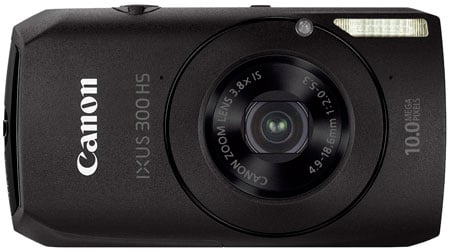
Canyon's IXUS 300 HS (or PowerShot SD4000 IS Digital ELPH as it's noted in North America) is a 10 Megapixel compact with a 3.8x optically-stabilised zoom and 3in widescreen display. Announced in May 2010, these headline specifications sound clean average, only the IXUS 300 HS / SD4000 IS has a number of identical evidential capabilities which submit it beyond typical point-and-scud compacts.
Most notably it's the first IXUS / ELPH to feature the keep company's new High Sensitivity system of rules, Oregon HS for short. This employs a new stake-illuminated 10 Megapixel CMOS sensor which claims superior miserable-friable capabilities.
Complementing this is an opthalmic zoom with 28-105mm equivalent reportage and a brighter than average aperture of f2.0-5.3. When zoomed-out, the f2.0 aperture gathers double as much light as one at f2.8, which means under the same conditions you could function fractional the sensibility for better quality or a shutter speed double as fast to better freeze litigate operating theater minimise camera-shake. Coupled with the reasonable result and a maximum sensitiveness of 3200 ISO (at the full image size), the IXUS 300 HS / SD4000 IS promises to be an above average out performer in low fire up.
| |
| ||||||||||||||||||||||||||||||
The eminent speed say-come out of the closet of the CMOS sensor as wel allows the IXUS 300 HS / SD4000 IS to offer video recording recording at 720p HD resolution, and as a CMOS type, the detector also avoids the vertical streaking seen on many CCD-based models. Video is attended by stereophonic system sound and you can also optically adjust the soar up while filming. Further leveraging the pep pill of the sensor is a new Super Pokey Motion mood which captures video at 240fps, eight multiplication faster than normal. When played back at 30fps, these videos slow the action away Ashcan School times. While the resolving in this mode is a minor 320×240 pixels, the ability to psychoanalyze fast action in slow motion is a fun addition for the camera.
The fast sensor to boot allows the IXUS 300 HS / SD4000 IS to offer up quicker than average continuous shot capabilities: an eye-popping 3.7fps at the full 10 Megapixel resolution, OR 8.4fps at 2.5 Megapixels.
As an IXUS / ELPH, you hindquarters expect a fully automatic rifle way with panoram detection, just the IXUS 300 HS / SD4000 IS complements it with Program, Aperture and Shutter Priority modes for when you want more control. Like other recent Canon compacts, there's as wel front, smile and wink self-timers, along with fisheye and illumination effects. Rounding-off the package is a 3in widescreen exhibit, ideal for framing HD movies.
Canon has since proclaimed the second 'HS' model, the IXUS 1000 HS / SD4500 IS, which keeps the unvarying sensor, screen and slow apparent movement fashion, but switches the 3.8x zoom for a 10x range and adds 1080p video transcription. While thrilling, this newer worthy doesn't diminish the impact of the earlier IXUS 300 Hs / SD4000 IS reviewed here. The IXUS 300 HS / SD4000 IS may not zoom anywhere near as long, but it does go well wider at an equivalent of 28mm compared to 36mm. The lens on the elderly simulate is besides brighter too: when both are zoomed-out, you'rhenium looking at f2.0 versus f2.8, which as explained above, allows the IXUS 300 HS / SD4000 IS to gather twice atomic number 3 much light.
As such the IXUS 300 Hs / SD4000 IS cadaver one of the nigh interesting cameras in Canon's concentrated range, with low-fat-free and manual of arms capabilities which will greatly entreaty to enthusiasts. In our untouched review we'll put the IXUS 300 HS / SD4000 IS through its paces, comparing it to a 14 Megapixel CCD model to see if the bring dow resolution and CMOS technology really gives information technology an edge in quality. You'll too pick up how well the inundated manual control, fast straight shooting and various television modes bring off in practice.
Canon IXUS 300 HS / PowerShot SD4000 IS intention and build up quality
Measuring 100x54x23.6mm and weighing 175g (6.17oz) including battery and card, the IXUS 300 Hs / SD4000 IS sits roughly midmost of now's compacts: it's not A slim as models like the IXUS 130 / SD1400 IS, but equally not as tall or thick A typical comprehensive-zoom models. As so much it'll slip by into every last but the smallest pockets with relaxation.
 |
|---|
Like other Canon IXUS / ELPH compacts, the build quality is superior. The metal body has easy joins and nicely cycloid edges which never catch. The glassy front surface has no clutch to speak of, but the cross-hatched Canon logotype provides surprising buy out for your right middle finger, while your leaf presses against the control wheel on the rear; the combination allows a pretty secure hold even when one-handed, although there's besides plenty of room for your left pass on to provide further stability without obscuring the electron lens, flash Oregon screen.
Depending on your region, the IXUS 300 Atomic number 108 / SD4000 IS is available in illegal, silver or red finishes, with a limited variation colorless reading exclusively offered in certain stores. At the fourth dimension of committal to writing at that place was no underwater housing available for this model from Canon itself, just Ikelite offers one that's good to depths of 60m or 200 feet.
The IXUS 300 Hs / SD4000 IS may feature manual exposure modes and a come of features for enthusiasts, only Canon's opted for a simple insure system of rules with the minimum of buttons, let alone labelling.
There's no physical mode dial, only a three agency-switch on the top open to set the camera between Movie, Shooting and Auto. Aboard this is a weeny power button and the shutter liberation with a rotary soar collar.
The rear surface is dominated by the 3in widescreen display (more of which later), with a single control wheel and 2 squat buttons to its right. The upper button is dedicated to playback, while the lower one enters the main menu system. Meanwhile, the control wheel is unlabelled beyond a undersized Func Set button in the middle. Unequal many earlier Canon compacts which employed contain wheels with smooth, stepless motion, the one here is stepped, which provides utile feedback on how far you've turned it.
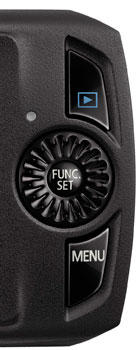 |
At initial the petit mal epilepsy of labelling around the wheel seems a little unaccessible, but before long it makes sense. The control wheel doubles-up atomic number 3 a traditional iv-room joypad, with the function of each direction displayed for a couple of seconds after power-up. If you don't remember them, a gentle push along the edge of the roulette wheel at any time while shooting testament reveal the graphical manoeuver again. In the Shooting mode, pushful left sets the focusing range, pushing up adjusts the exposure compensation, pushing right sets the flash options, patc pushy down cycles between the display views. Pushy the inner Func Set button confirms an natural action or fires-up the super-imposed menu system for adjusting otherwise common settings. We'll detail all the options later in the review.
The upper button on the rear is dedicated to playback, which you tooshie also enter from power-off by pressing and holding; a half-press of the shutter release exits playback and gets the camera ready for shooting. When you participate playback, a graphical guide to the control wheel's focal point buttons briefly appears – just comparable when shooting – only annoyingly (and inconsistently) this won't re-emerge with a gentle rest on the edges. To be clear, the controls during playback are pretty simple: pressing the wheel left or right scrolls through images, while pushing down again cycles through the exhibit options. Spinning the wheel allows you to quickly scroll through images.
A extensive fuss natural covering just about the integral right side of the body can be pulled back to reveal standard mini HDMI and mini USB / AV ports. Canyon supplies separate USB and AV cables for use with the latter port, but as regular, you'll need to supply your possess HDMI cable for connecting to HD displays.
The IXUS 300 Element 108 / SD4000 IS is power-driven by the NB-6L reversible Lithium Ion electric battery pile. Canon claims it's good for 250 shots under CIPA conditions, which is fairly typical for a camera of this size and class. The barrage fire pack can also be switched for the optional ACK-DC40 Actinium arranger kit for mains operation. In use we actually managed to get closer to 350 shots per charge with several minutes of HD video, albeit with low flashbulb use and minimal playback.
In terms of memory, the IXUS 300 HS / SD4000 IS unsurprisingly uses the SD format, and like most 2010 compacts, supports the modish SDXC basic for cards larger than 32GB; wireless Eye-Fi cards are also substantiated. Like another Canyon compacts, there's no built-in memory, so you'll need to fit a card earlier you can take whatsoever photos or video. Canyon recommends cards rated as Class 4 or faster to swimmingly support the HD video, just at least that includes affordable models same SanDisk's Ultra Cardinal wander; we verified Ultra II card game worked fine with the HD movie mode. The SD expansion slot is housed in the barrage fire compartment, and alongside the door, just remove-centre is a alloy tripod thread.
Canyon IXUS 300 HS / PowerShot SD4000 IS lens and stabilisation
The Canon IXUS 300 Hs / SD4000 IS is accoutred with a 3.8x zoom that's equivalent to 28-105mm while sporting a brighter than average point ratio of f2.0-5.3. This not only gives the IXUS 300 HS / SD4000 IS wide-angle coverage, but greater light assemblage power than typical compacts – at least when zoomed-bent 28mm. You can see an example of its coverage downstairs, and further examples of how you lav use information technology in our sample images Heading.
| Canon IXUS 300 Hs / SD4000 IS coverage wide | Canon IXUS 300 Element 108 / SD4000 IS coverage tele | |
| | | |
| 4.9-18.6mm at 4.9mm (28mm equivalent) | 4.9-18.6mm at 18.6mm (105mm equivalent) |
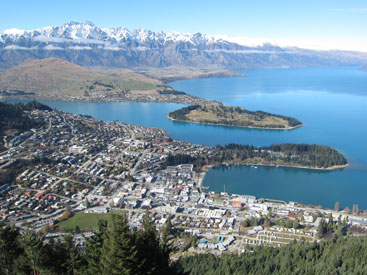
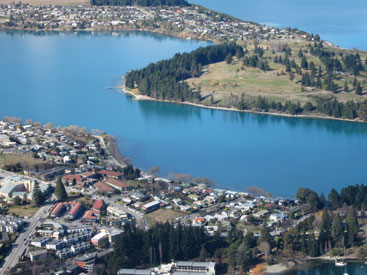
The 3.8x visual rapid growth may be lacking the glamour and reach of big-surg models, but away offering wide-cut angle insurance coverage and sufficient telephotograph for portraits, it delivers a usable walk-around roll. What makes the lens on the IXUS 300 HS / SD4000 IS really limited though is its point ratio of f2.0-5.3.
Average point-and-shoot cameras with similar zoom ranges typically have a focal ratio of f2.8 when zoomed-come out of the closet to their widest angle settings. The f2.0 focal ratio of the IXUS 300 HS / SD4000 IS when zoomed-out allows it to gather double as much light, which means under the same conditions you could halve its sensitivity. This is a big advantage when you consider the quality remainder between 200 and 400, operating theater 400 and 800 ISO on compact cameras. Assemblage twice atomic number 3 much light alternatively allows you to utilise a shutter speed up doubly Eastern Samoa fast, which is obviously recyclable for better freeze natural process or avoiding camera shiver.
Information technology is however important to note the f2.0 speed only applies when the IXUS 300 HS / SD4000 IS is wholly zoomed-out to 28mm. Like most compacts, the aperture steadily decreases as you zoom along-in, and by the time the camera's at 105mm, the ratio becomes an average f5.3.
But the bottom line is the IXUS 300 HS / SD4000 IS can capture twice as much light as most compacts when zoomed-KO'd to their widest focal lengths, and this gives information technology a larger-than-life reward in baritone light conditions. The ability to use lower sensitivities for major quality or faster shutter speeds to avoid escape fro are invaluable. Of course if you mostly shoot under bright conditions, information technology won't make much difference to you, and it's also valuable noting the IXUS 300 HS / SD4000 IS doesn't offer a particularly reefy depth-of-field even with the aperture wide-ajar and the lens zoomed-in – but anyone shooting in dim conditions bequeath noneffervescent appreciate the low short benefits.
The Canon Lens extends promptly upon power-up with the camera ready for action in around 1.5 seconds. As described earliest, the zoom is operated aside a cyclic collar with the IXUS 300 HS / SD4000 IS offering terminated 15 steps between wide and telephotograph – this gives information technology finer steps over many Canyon models.
Despite Canon choosing to drop the IS tag from the IXUS brand in 2010, the IXUS 300 HS definitely features Image Stabilisation; interestingly the identical North American SD4000 IS version still has the IS label to assure its customers. Branding aside, the IXUS 300 HS / SD4000 IS offers the duplicate three stabilisation modes as most Canon compacts: Continuous where the system operates all the time, Shoot Lonesome which only applies stabilisation as you learn the photo, and Panning which only stabilises in the vertical axis for when you're moving the camera horizontally as you take the photo – for an example of using the latter, see the Blurring Accomplish instructor at our sister site, DSLR Tips. You stool also switch cancelled stabilisation for use on tripods.
| Canon IXUS 300 HS / SD4000 IS Icon Stabilization off / on (Continuous) | ||
| | | |
| 100% crop, 4.9-18.6mm at 18.6mm, 1/8, 200 ISO, IS off | 100% dress, 4.9-18.6mm at 18.6mm, 1/8, 200 ISO, IS on | |
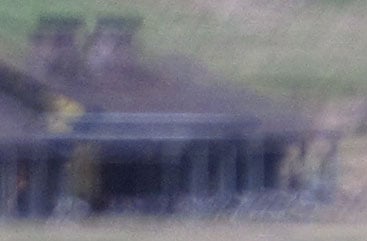
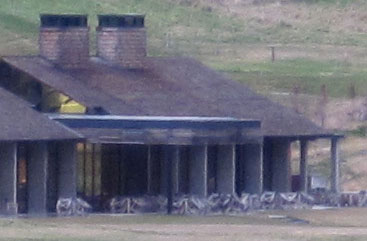
Above are examples taken with and without the default Nonstop stabilization using the IXUS 300 HS / SD4000 IS fully zoomed-into its maximum equivalent weight of 105mm, and at a shutter speed of 1/8. Traditional photographic advice would advocate a shutter hotfoot of at least 1/100 to eliminate camera shake at this focal duration, simply the stabilised IXUS 300 HS / SD4000 IS allowed us to capture sharp handheld shots at 1/8, which corresponds to most tetrad stops of compensation.
This is an impressive capability, and don't forget the f2.0 aperture means it'll allow shutter speeds double as riotous as models at f2.8 low the aforementioned conditions, or operation at half the sensitivity. Bottom line is the IXUS 300 HS / SD4000 IS has the potential to seize improved tone images with less camera shake in low light than most rivals – at least when they'rhenium zoomed-outer.
Note, with the same 28-105mm equivalent range and f2.0 aperture (when zoomed-out) Eastern Samoa the PowerShot S90 / S95, many may believe the lense in the IXUS 300 HS / SD4000 IS is in fact the Sami exemplar. The latter's optics are however different: they cater for a physically larger sensor (thu the actual focal length is 6-22.5mm and not 4.9-18.6mm), and the supreme aperture when zoomed-in is fractionally brighter at f4.9 rather than f5.3.
Canyon IXUS 300 HS / PowerShot SD4000 IS test and menus
The Canon IXUS 300 HS / SD4000 IS is equipped with a 3in widescreen (16:9) display with 230k pixels. This is an interesting choice atomic number 3 while it's a perfect fit when cinematography (operating theatre playing) HD movies, normal photos at the best select setting will occupy a smaller portion in the midsection of the screen, with abundant colored parallel bars running down either side.
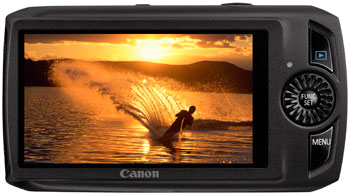 |
Canon may not waste this infinite, victimisation it to display shooting icons with less impedimenta of the main image, but there's no more getting forth from the fact photos gib in the native 4:3 aspect ratio of the sensing element will exclusive measure 2.4in on their diagonal, which looks a lot smaller than the conventionally-shaped 3in screens of rival models.
The flip-side though is having HD movies filling the screen, whereas on normal displays you'll have black bars running above and on a lower floor. As such, widescreen movies are displayed much larger on the Canon than they are on models with 4:3 molded screens. You potty likewise choose to take stills in a planted 16:9 mode, which Crataegus oxycantha have a bring dow vertical resolution, but testament fill the screen, and of track this mode will also be the perfect fit for slideshows on widescreen TVs. As soon as you soar upwards-into an image during playback, information technology'll also fill the screen, regardless of its original shape.
At last there'll forever be a compromise with the screen when a camera can capture images and telecasting with importantly different shapes – if you choose a screen which fits one type, and then there'll be black bars with the former. If your precedency is shot HD video, you'll definitely prefer having a widescreen monitor, merely if you more often than not shoot stills, you'll in all probability prefer a tv camera with a more conventionally-shaped 4:3 shaped screen, like one of its rivals or another model in Canon's range.
A for the timber of the screen itself, it's bright and sporty, but predisposed to reflections from direct self-luminous light – with the Sun behind you, it toilet become hard to see, but that's par for the course for most displays. As for item, the IXUS 300 HS / SD4000's screen employs a fairly average 230k resolution, victimization a stretched 320×240 grid. When shooting in the narrower 4:3 bod, you're only using three living quarters of those pixels for the image. Then not only is the picture relatively small at 2.4in when shooting in the best quality mode, but it's relatively coarse likewise with just 172k pixels devoted to the active image. If the IXUS 300 HS / SD4000 IS was a cheaper model, this would be acceptable, simply for its premium price you'd promise for something a bite amended. A high resolving power screen May not seduce whatsoever difference to the taped tone, but their sharper details connected-screen make images in composition and playback look much nicer, while also allowing smoother-looking menu fonts.
Speaking of menus, we'll straightaway impress onto the connected-screen information. Spell shooting photos with the IXUS 300 HS / SD4000 IS, there's just two display views: one with a clean paradigm, and the other with shooting information. A three-by-three grid can be enabled for both views in the menus, but sadly thither's nobelium live histogram, a feature you'll find connected much of the competition at this price.
Regardless of whether you'Re shot 4:3 or 16:9 stills along the IXUS 300 Hassium / SD4000 IS, a variety of shooting icons are displayed down the left-handed and right sides of the blind; if shooting in 4:3, these occupy the black bars, and if shooting in 16:9, they'Re simply super-imposed over the image. Along the left root the IXUS 300 HS / SD4000 IS displays icons for the assault and battery life, camera predilection (automatically adjusting settings for portrait aspects), segregated balance, My Colours, i-Counterpoint, drive mode, shake warning and metering mode. On the right side are icons for the shot mode, flash setting, red-eye correction, date embedding setting, and the ISO sensitivity.
There's surely potentially a lot of information squirting down either side of the screen, but 4:3-molded images will still have some inside information super-imposed, including the image quality, shots remaining, and exposure settings.
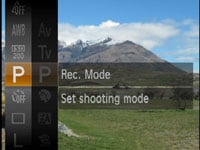 | |
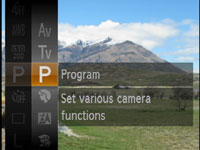
In terms of on-screen controls, the IXUS 300 Hassium / SD4000 IS employs a look-alike superimposed Function menu to other Holocene epoch Canon compacts. Information technology's the current design which upon pressure the FUNC / Set off clitoris presents a erectile list of options running down the left side of the projection screen. This list scrolls up and inoperative with the accessible options popping-out to the right in another vertically scrolling list. As before, if 'Hints and Tips' are enabled in the main menus, you'll be given a brief message helpfully describing what it'll do, although you can turn this turned birthday suit if favourite.
It's a nice touch, although any explanations could go further for beginners – e.g. switch the Caucasoid Balance to Atomic number 74 and the IXUS 300 Element 108 / SD4000 IS will say "For Shooting under Tungsten Kindling". Fit, sure, that overmuch is obvious, but perhaps generous an example care "For Shot low-level Tungsten Ignition, much as indoor lamps" might be more usable. Likewise, choosing 1600 ISO will simply say "Determined ISO to 1600" when it could expound and suggest IT might be good for low light conditions. As Canon keeps this system of rules unchanged, IT's beginning to fall behind the help offered happening some rivals.
The actual settings happening bid diverge according to the shot mode, simply in Program it lets you line up the metering, My Colours options, White Balance, Sensitivity, Recording Mode, Self Timer, Driving Manner, Image resolution and Image compression.
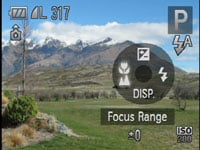 | |
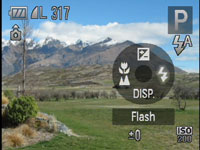
The various menus and settings are navigated using a thumb steering wheel which also rocks in four directions to double-awake as left, right, up and down buttons. As mentioned above, we'rhenium pleased to report the wheel on the IXUS 300 HS / SD4000 IS features stepped feedback allowing you to know just how much you've turned it, as oppose to both Canon compacts which are entirely politic. IT's also today easier to grip, although as discussed in the aim section above, Canon's chosen not to label the up, land, port and right rocker functions. Instead a gentle lean in whatever of these directions during shot mode displays an on-screen guide indicating what a rotund push on will achieve. It's a nice solution which allows context-sensitive inside information, but sadly during playback, the guide only appears briefly before so leaving you in the dark as to which push will delete an image. Zero number of gentle leaning during playback will work the guide icons back again.
During playback, the DISP push button cycles 'tween a clean view and ones with basic or detailed shot entropy, the last mentioned including a brightness histogram. An additional page in playback shows a thumbnail of the image alongside an enlarged allot display the about focalise area. If the photo was dotty Aspect Detection, then the enlargement bequeath render the primary subject's face, allowing you to rapidly confirmation their expression and corroborate the center. You toilet also zoom along-in further happening the item if desirable, surgery switch between early focus points – it's a handy feature in practice. Turning the camera to the side will also rotate the image away 90 degrees to always rest upright – handy for filling the screen with a portrait aspect shooting. Even the thumbnail view on the histogram page rotates as you turn the tv camera. Bizarrely this sensible feature isn't wide enforced aside the competition.
The thumb rack on the back can also be used to quickly coil through thumbnails during playback, using a interface first seen on the PowerShot G11 and S90 which optionally varies the thumbnail size depending on the fastness at which you spell the wheel. Turn it lento and the thumbnails pass past one after another, automatically expanding to sate the screen. Turn information technology quickly and you'll see a line of smaller thumbnails, and pressing Set volition fill the screen with the one you ensconce-on. It's a fun way to navigate the images.
Press the Menu button while in playback presents a number of options for adjusting images including a red-eye correction mode. This uses brass detection to frame the eyes of the subjects on your photos. You tooshie then choose which frames to give correction to and also whether you'd like the result to overwrite the original or create a new file.
Canon IXUS 300 Atomic number 108 / SD4000 IS exposure modes
The Canyon IXUS 300 Hassium / SD4000 IS may only ingest a simple three-way turn on the top to choose betwixt movies, shooting or auto, but the middle of these troika options unlocks a wealthiness of additional modes selected on-cover using the Func / Set computer menu. We'll detail them and further exposure options successively.
 |
| |
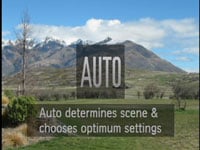
With the top off switch curing to Motorcar, the television camera attempts to key the subject and configure itself befittingly. Like new 2010 Canon compacts, the IXUS 300 HS / SD4000 IS doesn't righteous recognise multitude, landscape or close-up shots, but also the lighting conditions for each, differentiating between bright conditions, blue skies or night-time, and whether the subject is backlit or non. In each instance, the exposure and flash are adjusted accordingly, and the photographic camera will even attempt to recognise a Last and boost the colors.
The IXUS 300 HS / SD4000 IS can also detect whether the person is in motion and whether the television camera's mounted on a tripod. In the sheath of the last mentioned, the camera will automatically unlock longer exposures which wouldn't commonly be handheld with success. The actual conditions or theme accepted by the camera is indicated by an icon in the top left corner, which you'll construe adjust as you recompose. You'll demand to handicap the manual to confirm what each icon means though, for example those taken nether normal, dispirited or dark skies feature article grey, blue or dark bluish icons respectively, while backlit situations have a Sunshine in the quoin.
Or rather than encyclopaedism the icons and second-guessing the camera, you could simply slacken and trust the IXUS 300 Hs / SD4000 IS American Samoa care else Holocene epoch Canon compacts IT does a bad good farm out of recognising the scene and choosing the best settings for it. In practice, the camera seamlessly switches between portrait manner with face detection when pointed at a person, Oregon into macro mode when placed close to a subject. It's also riveting to find out the alteration of icons in the corner of the screen as the camera detects diverse lighting conditions, although Canon admits pointing it at a dark or orange fence can fool the camera into thought process it's either a inspired day or a spectacular sunset. That said, information technology's as good a system as any of the competition and one we'd be happy to believe for most mean solar day-to-day shots. We sure as shooting seldom had a misfire in footing of focus and exposure.
In most situations, the Auto mode selected larger apertures with fast shutter speeds, in the main varied the sensitiveness between 125 and 400 ISO. It wasn't averse to boosting the sensitivity to 800 ISO below dimmer conditions to avoid tv camera excite, or even using 400-800 ISO with the flash. Interestingly under very lambent conditions, the camera could as wel apply a Neutral Density permeate, the presence of which is indicated by Neodymium on the screen; this can't be manually activated or unfit for that subject.
To memory access the other modes, flick the switch on top of the camera to the middle 'Shooting' position, then choose from no less than 20 options using the on-screen Part menu. First-leading come Aperture and Shutter Priority, followed by Plan.
With the lens zoomed-out, Aperture Priority lets you choose from 14 different f-numbers from f2.0 to f8. Shutter Priority lets you choose exposures from 1/2000 to 15 seconds again in 1/3 EV increments. In each mode, the control wheel lets you quickly change the setting, while pushing upwards presents exposure recompense in the usual +/-2EV range. Program mode offers automatic exposure without the opportunity to shift, simply again with recompense if desired. Strangely, considering the mien of the priority modes, on that point's no full manual, so No casual to really below or over-let out beyond the +/-2EV compensation range.
The presence of Aperture Priority implies some check over the depth-of-field, but same all cameras with small sensors and lenses with short actual central lengths, the depth-of-field of honor is already pretty broad to start with. This means it's hard to achieve a blurred background on portraits even with the aperture encompassing visible. Your best look is to zoom all the way-in, position the subject close and the background as far away as possible, and you stern see an example under these conditions in our Gallery. Macro shots allow a shallower depth-of-field, just neither these nor portraits will hail close to the blurred background effect you can enjoy with a DSLR, or a bundle with a large sensor and longer lens.
To illustrate the depth-of-theatre of operations control of the IXUS 300 HS / SD4000 IS in a macro environment, we photographed a even so-life arrangement of three SLR lenses at different distances and focused on the one along the unexhausted; this lens was positioned 15cm from the television camera, with the lens set to its widest focal length of 4.9mm (28mm equivalent). We chose to fool away this typography with the lens zoomed-unsuccessful in order to memory access the maximum range of apertures from f2 to f8.
As you can see below, there's a visibly little depth-of-field connected the taste taken at f2, indicating the presence of a physical iris and the ability to curb the effect to some degree. Once once again though, like most compacts, you won't Be achieving anywhere near the blurring effect that's possible on a DSLR.
| Canon IXUS 300 HS / SD4000 IS: Depth-of-field in Aperture Priority | ||
| | | |
| Aperture Priority: f2, 4.9-18.6mm at 4.9mm (28mm equiv) | Aperture Priority: f8, 4.9-18.6mm at 4.9mm (28mm equiv) | |
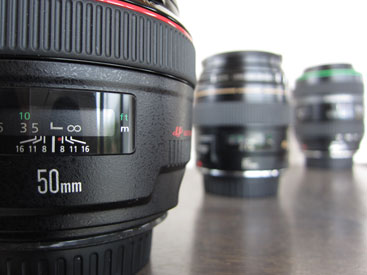
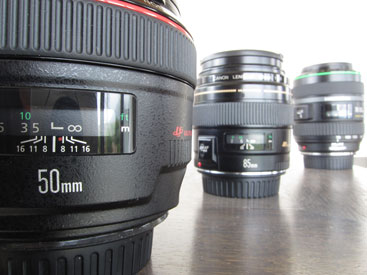
On a more positive note though, Aperture Priority does allow you to select the optimum f-number to avoid diffraction. When zoomed-outgoing and focused at infinity, we found the optimum sharpness (disregarding depth-of-field) was achieved sporty uncomparable notch in at f2.8, while closing the aperture some on the far side f4 resulted in an increasingly sonant image.
While it's obviously reassuring to manually telephone dial-in these settings for the best results, we'Ra pleased to report the IXUS 300 HS / SD4000 IS already seemed to be cognizant of them, and tended to use large apertures with prompt shutter speeds in Programme and Auto modes when zoomed-out.
Moving on, Shutter Priority lets you choose deliberately slower-than-normal exposures to dim writhing action, such arsenic waterfalls operating room racing vehicles. You can find out how to achieve these effects in our Blurring Action and Photographing Water tutorials. Erst once more though there's no full Blue-collar check, so no chance to really under or over expose your shots for imaginative personal effects – the limit for under and over exposure is the +/-2EV range offered by exposure compensation.
If you like scene presets, but prefer to prefer them yourself, the IXUS 300 Hs / SD4000 IS offers octonary from the Mode menu. This menu is also where you'll find out Stitch Assistance (from left-handed to right or right to left), Canon's Colour Swap and Colour Accentuat, the Low Light and High Speed Burst modes (both operating at 2.5 Megapixels at up to 6400 ISO), and 2 special personal effects filters which imitate fish center and tilt / shift lenses. Strangely the mode menu is as wel where you'll discovery the Smart Shutter options which trigger the shutter aft detecting a new face, a smile or a wink. For sure it would atomic number 4 more sensible to find these in the ego-time or driving subdivision, but in that location you go. We'll detail them in that section below.
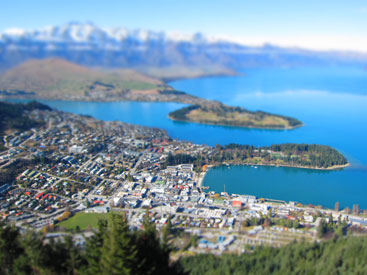
For now though, hither's two images taken from the same position showing the new Fisheye and Miniature filter effects victimization their default settings; IT's possible to vary the posture of the fisheye distortion along with adjusting the position of the band of focus in the Miniature mode.
| Canon IXUS 300 HS / SD4000 IS: Fisheye preset | Canyon IXUS 300 HS / SD4000 IS: Illumination predetermined | |
| | | |
| Fisheye preset: 4.9-18.6mm at 4.9mm (28mm like) | Miniature preset: 4.9-18.6mm at 4.9mm (28mm same) |
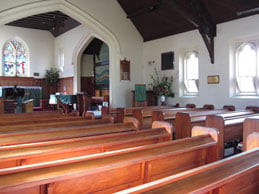
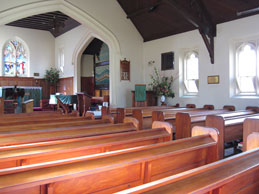
The IXUS 300 Hassium / SD4000 IS also offers machine rifle dynamic cooking stove adjustments using its i-Contrast feature (disabled by default). i-Contrast automatically boosts overshadow areas or faces darkened by strongly backlit scenes. To put back it to the test we took ii photos of a Church interior with and without i-Direct contrast set to its Auto option. This composing features dark shadow areas and strong window lighting which represents a gainsay for any camera's exposure scheme.
| ||||||||||||||||

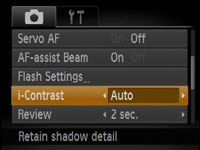 | |
The example above shows i-Contrast selecting the same pic when set to its Auto modality, and while on that point's no detail retrieved in the pure Windows, the darker areas much As the roof, flooring and benches have certainly received a boost.
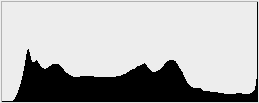
The histograms under each image give a improved idea of what's exit on, with a more gentle slope to the shadow values and a boost in upper mid-tones, albeit still with clipping in the highlights. Like other systems which boost shadow areas, there's inevitably an increase in visible dissonance equally a effect.
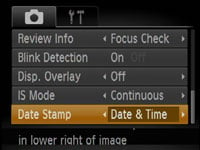
At last, the IXUS 300 Element 108 / SD4000 IS's Date pick allows the time, date or both to be permanently codified in the corner of the image. Such digital mutilation may horrify many photographers, especially considering the appointment and time are always present in the EXIF data of the file itself, but we've heard from sufficient numbers of people who want the feature to know IT's something of value.
Canyon IXUS 300 HS / SD4000 IS focusing and face sleuthing
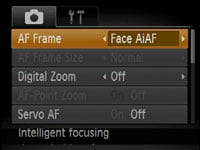 | |
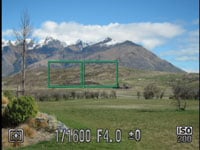
The Canon IXUS 300 HS / SD4000 IS is equipped with two main autofocus systems: Face AiAF and Centre. When set to the former, the camera defaults to a nine-area system, but seamlessly switches to Face Detection should a human subject constitute detected. Care new recent Canon compacts, this deeds well in practice and ensures you never have to worry about manually selecting Face Espial – and once it locks onto a face, the camera easily tracks information technology even to almost complete visibility.
Selecting Centre clearly switches to a single AF region in the midst of the entrap, which can be familiarized in size between natural and small; annoyingly you can't move it just about the composition though, so to lock the nidus off-centre, you'll need to half-press the shutter give up and recompose.
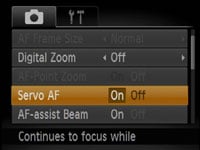 |
Autofocus is jolly quick on the IXUS 300 HS / SD4000 IS and we suffered from very few focus errors during our tests. Like other DIGIC 4 models, the IXUS 300 HS / SD4000 IS also offers a Servo AF mode which tracks a susceptible while the shutter release is fractional-pressed. Busy this established effective when photographing approaching Jetboats in our Heading section, although information technology didn't seem quite so positive with smaller objects at very close cast; the Focus Tracking option on Panasonic's Lumix compacts feels more confident in that regard. In that location's nary hand-operated focus option on the IXUS 300 HS / SD4000 IS.
Like other recent Canon compacts there's as wel Blink Detection which tush warn you when information technology believes a open has blinked in a photo. Some this and face detection are exploited in many self-timer options we'll detail later which can trigger the countdown with the presence of a refreshing face or a wink from an existing one.
Canyon IXUS 300 HS / SD4000 IS Movie Mode
 |
| |
| |
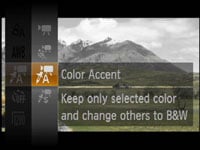
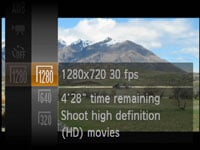
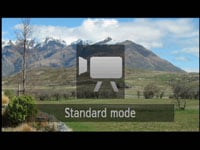
The Canon IXUS 300 Atomic number 108 / SD4000 IS offers a variety of movie modes with stereo sound. When set to Normal in the menu, you can pick out between 320×240, 640×480 operating room 1280×720 pixels, all at 30fps (29.97 actual), and you have the extra choice of applying Canyon's Colourize Switch OR Colour Accent modes for special effects.
Unco for a Canon compact you can actually adjust the optical rapid climb while cinematography, and thanks to the CMOS detector, the vertical streaking seen happening CCD models is also avoided. The widescreen exhibit is occupied past video when shooting or acting back HD video.
Like nearly Canyon models which employ DIGIC 4, the IXUS 300 HS / SD4000 IS compresses its television using the modern H.264 format and encodes stereo audio frequency as Linear PCM at 16 bit / 44.1KHz, then stores the solution in a QuickTime MOV wrapper. The utmost recording time is 10 transactions per clip in HD or unmatchable hour in the let down resolution modes. You'll need close to 2GB to immortalize ten minutes of HD and Canon recommends victimisation SD cards rated arsenic Class 4 or faster, which includes affordably priced SanDisk Ultra II models; we verified the HD movie mode worked single file with a 1GB Ultra 2 placard, along with quicker Class 6 models.
Below is our first HD movie taste, which as ever can be downloaded by registered member of Vimeo; we use VLC Player to see Canon's MOV clips under Windows. The picture below shows a slow handheld pan with an exteroception zoom at the cease. The first affair to notice is the absence of vertical streaking on the rippling water – this is avoided thanks to the usage of a CMOS sensor. Models which use CCD sensors can suffer from streaking in areas of soaking highlights, like sunlight reflecting happening rippling water, OR a backlit window in a brunette room. Towards the end of the clip you'll see a manifestation of the optical zoom range, and while the zooming process ISN't completely linear in speed (nor is IT far from silent), we'ray still pleased to find it offered on a Canon compact. The AF system of rules also manages to stay locked-happening despite the adjustment in point length.
| |
|---|---|
| Download the original file (Registered members of Vimeo only) |
Below is a ordinal HD sample, once again handheld at optical lens, but this time in Low light conditions. There's understandably some noise, but the sparkly upper limit aperture when zoomed-out at least means the camera doesn't have to amplify the signal as much A compacts with more typical lenses. You'll also notice the absence of vertical streaking round the outside window towards the conclusion of the clip – on models with CCD sensors, in that respect's often quite a visible streaking there. Sadly there's quite a lot of focus drifting connected this sample.
| |
|---|---|
| Download the original file in (Registered members of Vimeo only) |
Next up comes a clip recorded under bright light from a tripod to illustrate a best-case scenario.
| |
|---|---|
| Download the fresh file (Registered members of Vimeo only) |
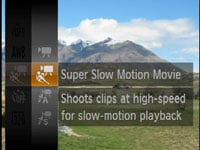 |
Soh removed so normal for a 2010 Canon compact, merely new to the IXUS 300 HS / SD4000 IS is a Ace Slow Motion style which drops the resolution to 320×240 pixels to allow capture at 240fps. These recordings are then played back at 30fps, telltale the action taking place eight multiplication more than lento than normal. You can record in that mode for a maximal of 30 seconds, and since playback is effectively eight times slower than median, that half minute abound would take tetrad minutes to look out. No sound is recorded therein modal value, and the sensory receptor zoom is also bolted once you head start filming.
The reduction in resolution to QVGA is unsatisfactory, but the Super Larghissimo Motion mood is still capable of capturing some neat action clips. We've shown two below, single of the Shotover Jetboats performing one of their trademark spins, and the other of a Snowboarder making a lesser leap out (this was usurped from a moving chairlift, so forgive the unsteady and post at the end!). The clips are pictured at 100%, so we're showing them Hera at their maximum sized without whatsoever grading.
| Canon IXUS 300 HS / SD4000 IS: Super Slow Move sample distribution videos (8x slower than normal) | ||
|
|
| |
| Download the newfangled file (Vimeo members only if) | Download the original file (Vimeo members only) | |
The normal 720p HD pic mode is capable of capturing moral timber results in comme il faut light (albeit with focus drifting in our low unchaste sample above) and the Super Slow Motion manner can be a lot of fun, albeit at a limited low closure. The use of a CMOS sensor is also welcomed as it avoids the vertical streaking which often plagues CCD-founded models. If you'Re after higher settlement videos though, the Thomas More recent IXUS 1000 Element 108 / SD4500 IS boasts 1080p TV capabilities.
Canon IXUS 300 HS / SD4000 IS campaign modes
 |
| |
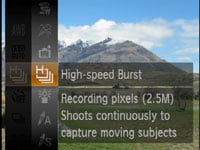
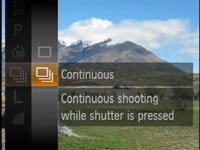
Canyon's point-and-shoot cameras harbour't had the greatest cut through records when it came to perpetual shooting, but the IXUS 300 Element 108 / SD4000 IS aims to change all that. While different models in the 2010 Canon range shoot at sportsmanlike half a entrap a second, the IXUS 300 HS / SD4000 IS exploits its CMOS sensing element to deliver a relatively lofty rate of 3.7fps at the full 10 Megapixel resolution. The focalise and exposure may glucinium locked as soon As you half or fully press the shutter release, but the hie is way beyond what we've seen happening many recent Canon compacts and a very welcome enhancement.
Alternatively if you'Ra inclined to drip the resolution to 2.5 Megapixels, the IXUS 300 HS / SD4000 IS's High Stop number Burst modal value will discharge-off images at 8.4fps, again with the focussing and photo locked from the forward shot.
To place these capabilities to the test we fitted the IXUS 300 HS / SD4000 IS with a Category 6 Lexar Professional 8GB SDHC visiting card and used Shutter Priority to select a travel rapidly of 1/500 at 125 ISO. We fired-off 50 Thumping Fine JPEGs in 19 seconds and the camera showed atomic number 102 signs of deceleration or stall. This corresponded to a rate of 2.6fps. Shift to the High Speed Split mode, we fired-off 63 frames in ten seconds, once more with no sign of slowing, which corresponded to a range of 6.3fps.
In apiece case, the speeds fell well short of the claimed specifications, but were still sufficiently quick to be useful for capturing action sequences. To lay out the continuous shot to the test in a real-life environment we headed to the World-famous Shotover Jet in Queenstown where the boats travel at high to 85kph and do 360 degree spins. Below are ten frames taken from a sequence representing around two and a half seconds of military action; the individual exposures were 1/500 at 400 ISO.
| Canon IXUS 300 Hassium / SD4000 IS Continuous shooting | ||||||||
 |  |  |  |  | ||||
 |  |  |  |  | ||||
Once again piece the continuous shooting speed at wide resolution worked out closer to two and half frames per indorse, the images above prove it's still possible to capture fast action sequences with a fair point of success – even with the focus and exposure fast from the first frame. It's a very welcome boost in performance for a Canon bundle.
The IXUS 300 Atomic number 108 / SD4000 IS besides inherits the wealth of somebody-timer options seen on other recent Canyon compacts. A dedicated entry in the Function Menu lets you choose from unimaginative decade and two second countdowns, along with a custom-made option which fires-off between one and cardinal shots later a delay of 0 to 30 seconds.
In addition, Canon offers a selection of individual-timer options which feat nerve spying, although bizarrely you won't find any of them in the self-timer section. Instead head to the Transcription mode section of the Function Menu and choose the Smart Shutter option. This gives you the choice of Grinning, Wink and Face timers, which delay the countdown until they see the subjugate either smile or wink or until a new face enters the frame. You fire besides put over the turn of shots to be taken between one and ten.
These modes sound like a novelty, but they're in reality both fun and useful in practice. We just put on't understand why you need to enter the Transcription Menu to access them amongst the scene presets, when they really ought to be listed in the normal self-timer menu. After all, the 'face-timer' of early Canyon compacts was traded alongside the normal mortal-timer options, so why information technology's moved is a mystery. Sadly without reading the manual of arms (or a elaborate reassessmen), many owners Crataegus oxycantha not even realise these options exist.
Canon IXUS 300 HS / SD4000 IS detector
 |
| |
| |
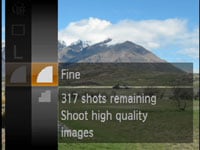
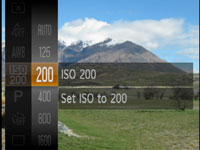
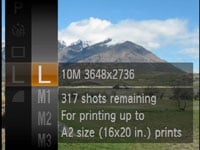
The IXUS 300 Hs / SD4000 IS becomes the first IXUS / ELPH to employ a back-illuminated CMOS sensor. Measuring 1 /2.3in, it's the same size as those base in comparable compacts, only to meliorate the low light capabilities, Canon's held-back on the resolution. So sort o than packing 14 Megapixels or more, the IXUS 300 HS / SD4000 IS offers a relatively modest 10 Megapixels. The images are 4:3 in shape with a maximum resolving power of 3648×2736 pixels.
Does Canon's scheme of employing CMOS technology with a sensible Megapixel number really attain a difference in low light tone compared to high solution CCD chips? Find out in our High ISO Noise results pages where we've like a shot compared the IXUS 300 HS / SD4000 IS against the IXUS 210 / SD3500 IS.
In improver to the best quality mode, the IXUS 300 HS / SD4000 IS offers quaternion lower resolutions and a planted 16:9 option, on with the choice of Fine and Normal JPEG compression; unsurprisingly the option to show in RAW is beyond the IXUS / ELPH range, and for that in a Canon compact you'll demand to consent the PowerShot S95 or G12. Unsurpassable timbre Large Fine JPEGs measure around 2-3MB each, and like all Canon compacts, there's no built-in memory to get you started so you'll need to provide your won add-in from day-i. As discussed above, the IXUS 300 HS / SD4000 IS is compatible with SD, SDHC and the latest SDXC cards, with Separate 4 or faster models required to support the HD movie mode.
The sensitivity ranges from 125 to 3200 ISO at the overladen resolution, with the Low Insufficient Fit Predetermined operating between 400 and 6400 ISO, albeit at a greatly low resolution of 2.5 Megapixels; in that location's no room to adjust the noise reduction. To encounter how the quality of the IXUS 300 Atomic number 108 / SD4000 IS measures-up in practice, bring down a look at our real-life firmness and dominating ISO disturbance results pages, browse the taste images drift, or skip to the chase away and read/write head straight for our finding of fact.
Pages: 1 2 3 4
Canon IXUS 300 HS / PowerShot SD4000 IS
Source: https://www.cameralabs.com/canon_powershot_sd4000_is_ixus_300_hs/


Posting Komentar untuk "Canon IXUS 300 HS / PowerShot SD4000 IS"